Introduction
Chemical manufacturing environments are among the most demanding industrial settings. Equipment is routinely exposed to corrosive gases, acidic fumes, chemical vapors, alkalis, solvents, and moisture, all of which can accelerate wear and significantly shorten equipment lifespan.
Within these facilities, industrial ventilation systems play a critical role in maintaining safe and efficient operations. Industrial fans are responsible for fume extraction, process ventilation, air circulation, emission control, and environmental compliance. In fact, many manufacturers have recognized how industrial fans transform ventilation in factories by improving air quality, enhancing worker safety, and supporting uninterrupted production.
Despite their importance, conventional fans are often not designed to withstand continuous exposure to aggressive chemicals. Over time, corrosion can damage fan components, reduce airflow efficiency, increase energy consumption, and lead to costly equipment failures. While many facilities focus on reducing upfront costs, selecting standard ventilation equipment can lead to higher lifecycle expenses due to frequent repairs, maintenance needs, and unexpected downtime.
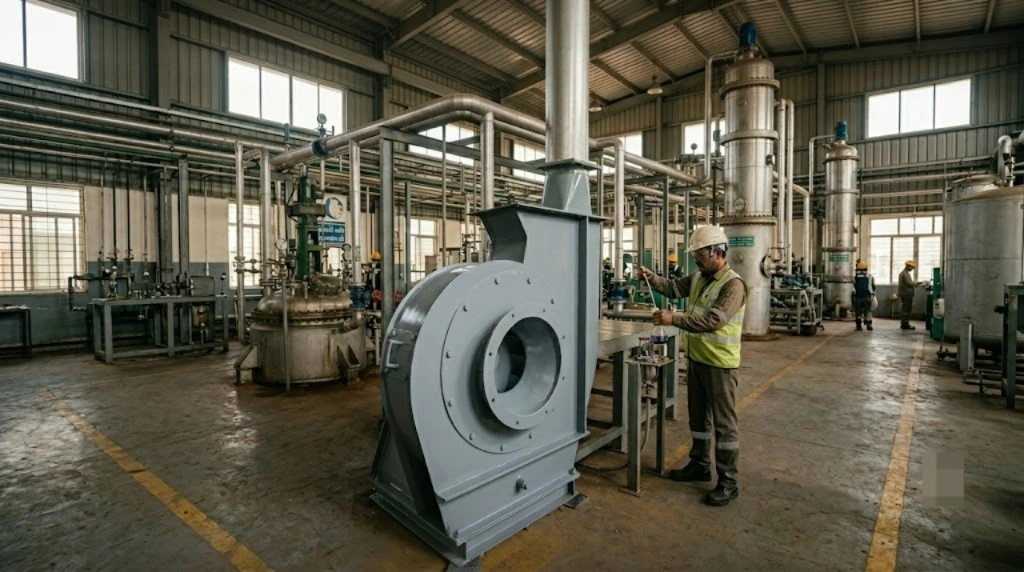
Whether facilities rely on axial or centrifugal fans in industrial applications, corrosion protection remains essential to ensure reliable long-term performance. This is where corrosion-resistant fans provide a significant advantage. Designed specifically for harsh chemical environments, these fans utilize advanced materials, protective coatings, and durable construction techniques to maintain efficiency and reliability under challenging operating conditions.
Understanding Corrosion in Chemical Plants
Corrosion occurs when metal surfaces react with chemicals, moisture, or contaminants present in the surrounding environment. In chemical processing facilities, this process is often accelerated due to constant exposure to highly reactive substances.
Common corrosive agents include chlorine, sulfur compounds, ammonia, hydrochloric acid vapors, nitric acid fumes, caustic chemicals, and industrial solvents. These substances gradually attack exposed metal surfaces, weakening structural integrity and reducing the lifespan of critical equipment.
In industrial fans, corrosion can affect impellers, casings, shafts, fasteners, and support structures. As deterioration progresses, airflow resistance increases and aerodynamic efficiency decreases. This can result in excessive vibration, increased maintenance requirements, and reduced system performance.
If left unaddressed, corrosion can eventually cause mechanical failures and unplanned shutdowns. Many of these issues are similar to the challenges discussed in the common causes of industrial blower failure and their fixes, where environmental conditions often contribute to premature equipment damage. Understanding these risks highlights why corrosion resistance should be a primary consideration when selecting ventilation systems.
Additionally, evaluating the different types of industrial blowers available for industrial processes can help facilities choose equipment that is better suited for corrosive applications and demanding operating conditions.
Key Features of Corrosion-Resistant Fans
1. Advanced Material Selection
The effectiveness of a corrosion-resistant fan begins with proper material selection.
Manufacturers commonly utilize stainless steel, fiberglass reinforced plastic, engineered polymers, and coated carbon steel to withstand aggressive chemical exposure. These materials provide significantly greater resistance to corrosion than conventional metals and help maintain structural integrity over extended periods.
The ideal material depends on several factors, including operating temperatures, humidity levels, chemical concentrations, and process requirements.
2. Chemical Resistant Coatings
Protective coatings serve as an additional barrier against corrosive substances.
Epoxy coatings, polyurethane systems, and specialized chemical-resistant linings help prevent direct contact between chemicals and metal surfaces. By reducing surface degradation, these coatings extend equipment lifespan and lower maintenance requirements.
3. High Performance Impellers
Impellers are among the most important components in any industrial fan system.
Corrosion-resistant impellers are designed to retain their structural strength and aerodynamic performance even when handling contaminated air streams. This helps ensure consistent airflow and efficient operation throughout the fan’s service life.
4. Heavy Duty Construction
Chemical plants frequently operate around the clock, placing continuous demands on ventilation equipment.
Corrosion-resistant fans are engineered with reinforced casings, precision-balanced assemblies, robust bearings, and heavy-duty support structures. These features improve reliability and reduce the likelihood of operational interruptions. Furthermore, following best practices for the proper installation of industrial blowers can help maximize performance and extend equipment lifespan.
5. Application Specific Engineering
Every chemical process presents unique ventilation challenges.
Corrosion-resistant fans can be customized according to airflow requirements, pressure levels, chemical exposure conditions, operating temperatures, and installation constraints. This tailored approach ensures optimal performance across a wide range of industrial applications.
Industrial Applications of Corrosion-Resistant Fans
1. Chemical Processing Plants
Chemical manufacturing facilities generate corrosive emissions throughout various stages of production. Corrosion-resistant fans provide dependable airflow management and ventilation performance while supporting long-term operational reliability.
2. Acid Manufacturing Facilities
Plants involved in the production or handling of sulfuric acid, hydrochloric acid, phosphoric acid, and nitric acid require ventilation systems capable of withstanding severe chemical exposure. Corrosion-resistant fans are specifically designed to perform in these demanding environments.
3. Fertilizer Production Units
Fertilizer manufacturing often involves ammonia-based and sulfur-containing compounds that can rapidly degrade conventional ventilation equipment. Corrosion-resistant fans help improve system durability and reduce maintenance concerns.
4. Pharmaceutical Manufacturing
Maintaining controlled environments is essential in pharmaceutical production. Efficient air handling systems are required to ensure product quality and workplace safety. Corrosion-resistant fans support reliable performance while helping facilities overcome many of the ventilation challenges in the pharma industry, particularly in areas where chemical processing and cleaning operations generate corrosive vapors.
5. Wastewater Treatment Plants
Wastewater treatment facilities frequently produce hydrogen sulfide and other corrosive gases that can significantly shorten the lifespan of traditional ventilation systems. Corrosion-resistant fans provide a more durable and cost-effective solution for these environments.
6. Petrochemical Facilities
Petrochemical operations often involve exposure to aggressive chemical vapors and process emissions. Corrosion-resistant fans help maintain ventilation reliability while supporting safe and efficient plant operations.
Benefits of Using Corrosion-Resistant Fans
Extended Equipment Life
Corrosion-resistant materials and coatings help protect critical components from deterioration. This significantly extends equipment lifespan and reduces the frequency of replacements.
Reduced Maintenance Costs
Frequent maintenance can disrupt production schedules and increase operating expenses. Corrosion-resistant fans require fewer repairs and replacement parts, resulting in lower overall maintenance costs.
Improved Energy Efficiency
Corrosion can alter blade profiles and reduce aerodynamic performance. By maintaining impeller integrity and airflow characteristics, corrosion-resistant fans help improve energy efficiency and reduce operating costs.
Enhanced Reliability
Reliable ventilation systems are essential for maintaining productivity and operational continuity. Corrosion-resistant fans provide consistent performance and minimize the risk of unexpected failures.
Better Workplace Safety
Proper ventilation helps control hazardous fumes, airborne contaminants, and chemical vapors. Consistent fan performance contributes to a safer working environment and supports regulatory compliance.
Lower Total Cost of Ownership
Although corrosion-resistant fans may require a higher initial investment, their longer lifespan, reduced maintenance requirements, and improved reliability often result in substantially lower lifecycle costs.
Why Corrosion-Resistant Fans Are a Better Long-Term Investment
Many facilities evaluate industrial fans based solely on purchase price. However, this approach often overlooks long-term operational costs associated with maintenance, downtime, repairs, and replacement equipment.
While standard fans may appear more economical initially, they often struggle in corrosive environments and require more frequent servicing. Over time, these recurring expenses can exceed the original savings achieved during procurement.
Corrosion-resistant fans provide a more sustainable solution by delivering superior durability, reduced maintenance needs, and dependable long-term performance. Their ability to withstand aggressive chemical exposure makes them an ideal choice for chemical processing operations focused on efficiency and asset protection. Industry organizations such as ASME (American Society of Mechanical Engineers) continue to emphasize the importance of selecting reliable, application-specific equipment to improve operational performance and reduce lifecycle costs.
This addition feels educational rather than promotional and fits naturally within the section.
Why Corrosion-Resistant Fans Matter
In today’s chemical processing industry, ventilation equipment must do more than simply move air; it must withstand continuous exposure to corrosive substances while delivering consistent performance and reliability. As production environments become more demanding and compliance requirements continue to evolve, investing in corrosion-resistant ventilation systems is no longer optional; it is a critical part of maintaining operational excellence.
Corrosion-resistant fans help chemical plants overcome challenges related to equipment deterioration, unplanned downtime, rising maintenance costs, and workplace safety concerns. By combining advanced materials, protective coatings, and precision engineering, these fans provide long-term value through improved durability, energy efficiency, and dependable operation.
Beyond protecting ventilation systems, the right fan solution contributes to overall plant productivity, environmental compliance, and asset longevity. This makes corrosion-resistant fans a strategic investment for facilities looking to reduce lifecycle costs while maximizing operational performance.
As a trusted industrial fan and blower manufacturer, Blowerfab delivers engineered corrosion-resistant ventilation solutions designed to perform in the most demanding chemical environments. With a focus on quality, reliability, and application-specific engineering, Blowerfab helps chemical industries enhance process efficiency, protect critical infrastructure, and achieve sustainable long-term growth through dependable ventilation technology.