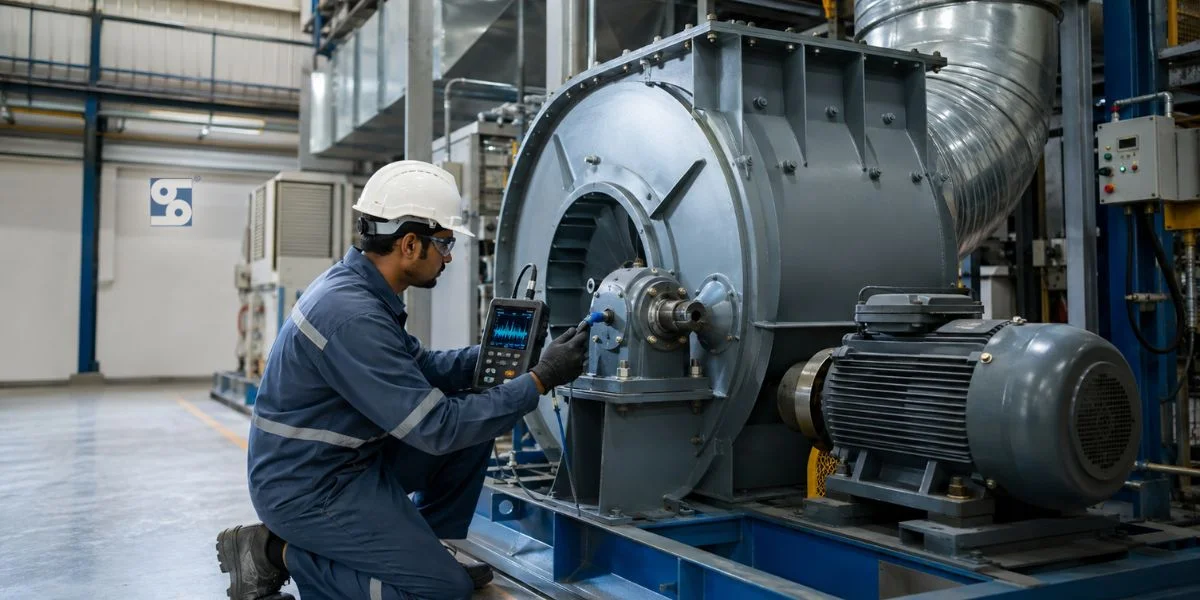
Industrial fans operate continuously in demanding environments. They support ventilation, cooling, exhaust, dust collection, drying, and process applications. When a fan starts vibrating more than usual, it signals a problem that needs attention.
Industrial Fan Vibration can affect airflow, energy efficiency, component life, and production reliability. Understanding how an industrial fan works is the first step toward identifying these problems. A basic understanding of centrifugal fan operation helps explain how the impeller, housing, and airflow system work together.
A minor imbalance can place extra load on bearings. Misalignment can stress the shaft and coupling. Loose mounting can increase movement across the entire assembly.
The key is to identify the source early. A systematic inspection helps find the problem before it leads to costly downtime or major component failure.
Understand the Main Causes of Fan Vibration
Several conditions can cause Industrial Fan Vibration. Each problem produces different symptoms and requires a specific solution.
Common causes include
- Impeller imbalance
- Shaft or motor misalignment
- Worn or damaged bearings
- Loose foundation bolts
- Bent shafts
- Damaged fan blades
- Incorrect belt tension
- Pulley misalignment
- Material buildup on the impeller
- Airflow restrictions
- Incorrect operating speed
- Structural resonance
Finding the exact cause is more effective than simply tightening components or replacing parts.
Inspect the Fan Before Making Repairs
Start with a complete visual inspection when you notice Industrial Fan Vibration.
Turn off the fan and follow the required safety procedures before inspection. Check the fan housing, impeller, shaft, bearings, coupling, belts, pulleys, and mounting structure.
Look for loose bolts, cracks, corrosion, damaged blades, and signs of contact between rotating and stationary parts.
Check the impeller for dust or process material buildup. Even a small amount of uneven buildup can disturb the rotating balance.
Also inspect the fan foundation. A stable foundation provides the support needed for smooth operation.
Check the Impeller Balance
Impeller imbalance is one of the most common causes of Industrial Fan Vibration.
An industrial fan impeller must rotate with proper balance. Uneven material buildup, corrosion, wear, or physical damage can change the weight distribution.
Inspect the blades carefully. Remove unwanted buildup using an appropriate cleaning method. Do not bend or damage the blades during cleaning.
If the impeller has physical damage, professional repair or replacement may be necessary. Dynamic balancing can also help restore smooth rotation when required.
A properly balanced impeller reduces mechanical stress and helps the fan maintain stable performance.
Verify Shaft and Drive Alignment
Misalignment creates additional forces during fan operation. It can increase vibration and accelerate wear on connected components.
For direct-coupled fans, check the alignment between the motor shaft and fan shaft. Use suitable alignment tools for accurate results.
For belt-driven systems, inspect the pulleys and belts. Make sure the pulleys remain aligned and the belt has the correct tension.
Incorrect alignment can affect bearings, couplings, shafts, and motors.
Correct alignment helps control Industrial Fan Vibration and supports longer service life.
Inspect Bearings and Lubrication
Bearings carry the rotating assembly and directly influence fan reliability.
Worn bearings can produce vibration, unusual noise, and excessive heat. Poor lubrication can increase friction and accelerate bearing wear.
Check the bearing condition during scheduled maintenance. Monitor operating temperature and listen for unusual sounds.
Follow the recommended lubrication schedule. Use the correct lubricant and quantity. Avoid over-lubrication because it can also create operating problems.
Replace bearings when they show excessive wear or damage.
A healthy bearing system helps reduce Industrial Fan Vibration and protects the rotating assembly from unnecessary stress.
Examine the Foundation and Mounting
The fan needs a rigid and stable foundation. Loose mounting can allow unwanted movement during operation.
Check all foundation bolts and mounting points. Tighten loose fasteners according to the required specifications.
Inspect the base for cracks, deformation, or uneven support. Make sure the fan sits correctly on its mounting structure.
A weak foundation can amplify vibration even when the fan’s rotating components are in good condition.
A properly engineered mounting arrangement provides better stability and supports reliable industrial blower operation.
Measure Vibration Levels
Visual inspection helps identify obvious problems. Vibration measurement provides more useful operating data.
Use a suitable vibration meter or analyzer at key points around the fan and motor. Check bearing housings and other relevant locations.
Record the readings during normal operation. Compare them with the manufacturer’s recommended limits and previous readings.
Trend monitoring is especially useful. A gradual increase in vibration can indicate developing wear before a visible failure occurs.
This approach helps maintenance teams identify Industrial Fan Vibration early and plan corrective action before the problem affects production.
Check Airflow and Operating Conditions
Mechanical components are not always the source of vibration.
The fan can also vibrate when it operates outside its intended conditions. Blocked filters, restricted ducts, incorrect dampers, or excessive system resistance can affect fan performance.
Check the inlet and outlet conditions. Make sure the airflow path remains clear.
Verify the fan speed as well. Running a fan at an unsuitable speed can increase vibration, reduce efficiency, and add stress to components.
The fan should match the required airflow and pressure for the application.
This is where correct industrial blower selection becomes important.
Fix the Root Cause Instead of the Symptom
Correcting Industrial Fan Vibration requires a systematic approach.
First, identify the source. Then correct the specific problem.
Balance the impeller if required. Align the drive correctly. Replace damaged bearings. Correct belt tension. Tighten the mounting system. Remove material buildup. Resolve airflow restrictions.
After completing the repair, run the fan under normal operating conditions. Measure vibration again and compare the new readings with the earlier results.
The repair is successful when the vibration returns to an acceptable operating level and the fan operates smoothly.
Select the Right Industrial Blower
Long-term reliability starts with proper blower selection and engineering.
An industrial blower must match the application’s airflow, pressure, temperature, material, operating speed, and installation conditions.
The impeller design also matters. Proper balancing supports smooth rotation. The shaft must handle the operating load. Bearings must match the application. The housing must provide suitable structural strength.
Drive selection also affects performance. Direct-drive and belt-drive arrangements offer different operating characteristics.
A properly designed industrial blower provides stable airflow while reducing unnecessary mechanical stress.
For demanding industrial applications, selecting the right blower from the beginning can prevent many recurring vibration issues.
Prevent Vibration With Regular Maintenance
Preventive maintenance helps control Industrial Fan Vibration before it becomes a serious problem.
Create a regular inspection schedule. Check bearings, impellers, shafts, belts, couplings, mounting bolts, and foundations.
Monitor vibration levels over time. Clean the impeller when necessary. Check alignment after major maintenance work.
Also inspect the connected ducting and airflow system. Changes in system resistance can affect fan performance.
Regular maintenance protects critical components and reduces unexpected downtime.
Keep Your Industrial Fan Reliable
Industrial Fan Vibration is more than an operating nuisance. It often indicates imbalance, misalignment, bearing wear, mounting problems, or unsuitable operating conditions.
A proper diagnosis starts with inspection. It continues with vibration measurement and operating checks. The final step is to correct the root cause and verify the result.
The right industrial blower also makes a major difference. Proper impeller balance, shaft design, bearing selection, drive arrangement, and application-specific engineering all contribute to dependable operation.
When you need an industrial blower that matches your airflow, pressure, and operating requirements, choose a manufacturer that understands your application and builds for reliable performance.
Need a reliable industrial blower for your application? Contact The Blowerfab for an industrial blower solution designed around your specific airflow, pressure, and operating requirements.