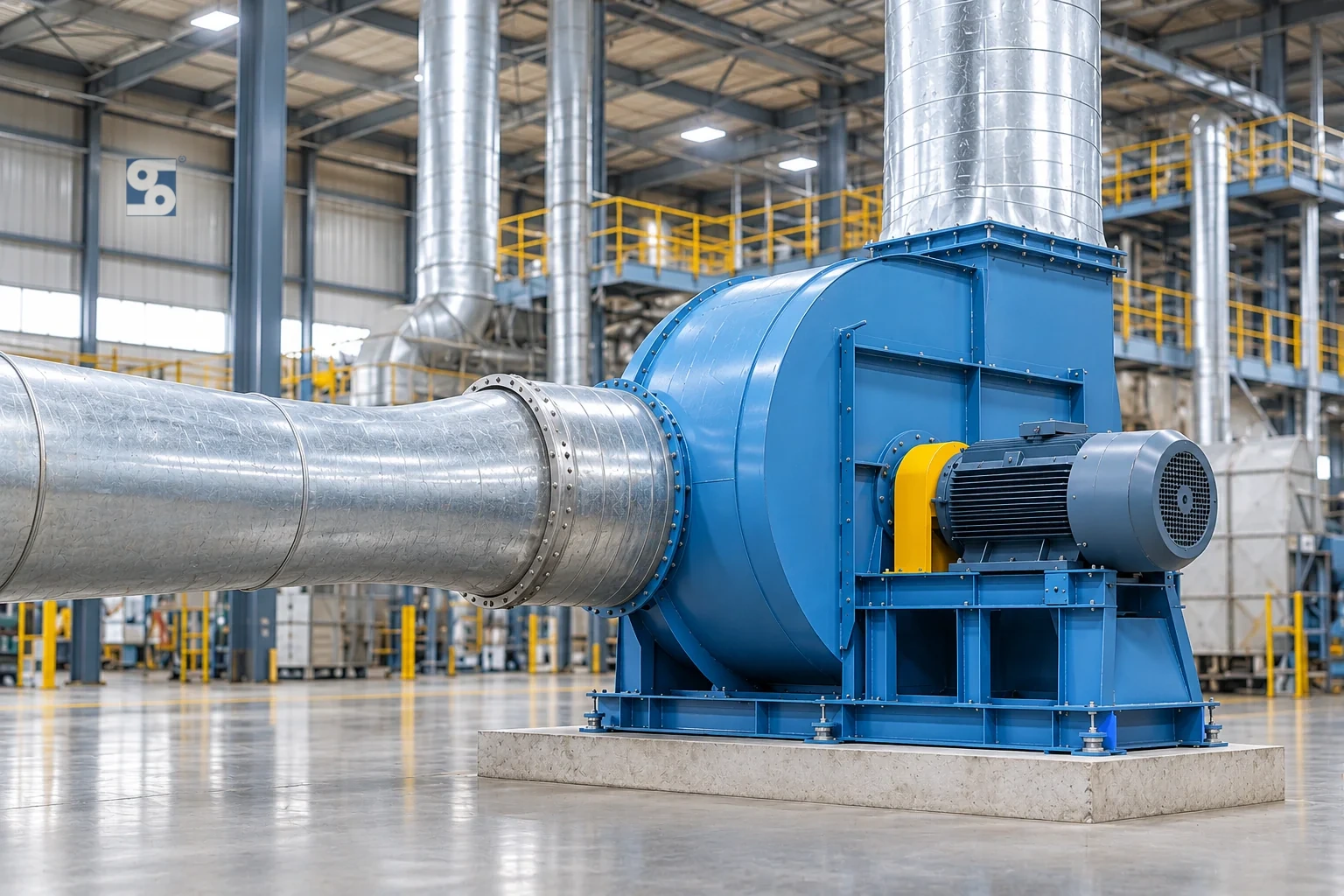
Industrial fans play an important role in maintaining ventilation, cooling, and air circulation across manufacturing facilities. However, installing a high-capacity industrial fan does not always guarantee effective airflow. The way air moves through ducts, equipment, and different sections of a facility also affects overall system performance.
Proper airflow distribution helps industrial fans deliver the required air volume to the right locations. It reduces unnecessary resistance, supports consistent ventilation, and prevents the fan from working harder than necessary.
When airflow remains balanced, industries can maintain better operating conditions while controlling energy consumption. The U.S. Department of Energy’s industrial fan system guidance also highlights the importance of proper fan system design and operation for improving performance.
For manufacturers, selecting the right industrial fan or blower is only one part of the process. Proper system design, duct arrangement, air balancing, and regular maintenance also determine how efficiently the equipment performs.
What Is Airflow Distribution in Industrial Fan Systems
Airflow distribution refers to how air moves from an industrial fan through a ventilation system and reaches different areas of a facility. It ensures that each section receives the required amount of air based on its operational needs.
In industrial applications, air travels through ducts, bends, filters, dampers, and outlets before reaching its destination. Each component affects air movement and pressure.
Uneven Airflow Distribution creates problems such as insufficient ventilation, temperature differences, and inconsistent cooling. Some areas may receive excessive airflow, while others may receive too little.
A properly designed system maintains balanced airflow throughout the facility. It also allows industrial fans to operate closer to their intended performance conditions.
How Proper Airflow Distribution Improves Industrial Fan Efficiency
Airflow management directly affects the performance of industrial fans and blowers. Here are the main ways proper distribution improves system efficiency.
1. Reduces Pressure Loss Across the System
Air encounters resistance when it moves through ducts, fittings, filters, and other components. Sharp bends, sudden duct size changes, and restricted passages increase this resistance.
When resistance increases, the fan requires more pressure to maintain the desired airflow. This can increase power consumption and reduce overall system efficiency.
A well-planned duct layout uses suitable duct dimensions, smoother transitions, and properly designed bends. These improvements reduce unnecessary pressure losses.
When the system offers less resistance, the industrial fan can deliver the required airflow without operating under excessive pressure demands.
2. Maintains Consistent Airflow Across Different Areas
Large manufacturing facilities often have multiple production zones. Each zone may require a different level of ventilation, cooling, or air supply.
Poor distribution can create airflow differences between these areas. One production section may receive sufficient air, while another experiences poor circulation.
Proper Airflow Distribution helps maintain the required air volume at different outlets. Engineers can use balancing dampers, suitable duct layouts, and correctly positioned air outlets to control the flow.
This approach supports consistent ventilation and helps maintain suitable working conditions across the facility.
3. Reduces Unnecessary Energy Consumption
Industrial fans consume electricity to move air against system resistance. When the system contains restrictions or distributes air poorly, the fan may require additional power to achieve the required performance.
A properly balanced ventilation system reduces avoidable resistance and improves how efficiently the fan delivers air.
For example, an industrial facility with poorly designed ductwork may require a higher fan speed to compensate for insufficient airflow in certain areas. Improving duct arrangements and balancing air distribution can reduce this requirement.
Selecting the correct fan capacity and operating point also helps prevent unnecessary energy use. The objective is to achieve the required airflow without placing additional demands on the equipment.
4. Supports Better Temperature Control
Temperature control is important in manufacturing plants, warehouses, processing units, and other industrial environments.
Heat from machinery, production processes, and operating equipment can create temperature differences across a facility. Uneven air circulation may allow hot air to accumulate in certain areas.
Proper airflow helps remove unwanted heat and supports better temperature management. It directs fresh or conditioned air towards the areas that need it.
Industrial ventilation fans and blowers help maintain air movement based on the facility’s requirements. This supports more consistent cooling and reduces the chances of localized heat buildup.
5. Prevents Excessive Load on Industrial Fans
An industrial fan performs best when its operating conditions match the system requirements. Incorrect duct sizing, blocked filters, and poorly positioned components can increase system resistance.
As resistance changes, the fan operates at a different point on its performance curve. This can affect airflow, pressure, and power consumption.
Proper system design helps the fan operate within its suitable performance range. It also reduces unnecessary adjustments to fan speed and operating pressure.
Choosing a fan with the correct airflow and static pressure ratings is equally important. It helps prevent capacity mismatches and supports reliable operation.
6. Improves Ventilation and Air Quality
Industrial environments often produce dust, fumes, smoke, heat, and other airborne contaminants. Effective ventilation helps remove these unwanted substances from the workplace.
However, simply installing an exhaust fan does not guarantee proper air removal. The system must capture and move air from the required locations.
Correct fan positioning, suitable exhaust points, and properly designed ductwork help maintain effective air movement.
For applications involving dust collection or industrial fumes, the system must also consider filtration requirements and the characteristics of the material being handled.
Proper Airflow Distribution supports effective ventilation and helps maintain cleaner working conditions.
Factors That Affect Airflow Distribution in Industrial Applications
Several system components influence how effectively industrial fans distribute air. Understanding these factors helps engineers select suitable equipment and improve ventilation performance.
Duct Design and Layout
Duct diameter, length, bends, and transitions affect air resistance. Poorly designed ductwork can create pressure losses and uneven airflow. Proper duct sizing and layout support smoother air movement.
Fan Selection and Capacity
Every industrial fan has specific airflow and pressure capabilities. Selecting equipment based only on motor power can lead to performance problems. Engineers must consider the required airflow volume, static pressure, operating conditions, and application.
Damper Positioning
Dampers control the amount of air moving through different duct sections. Incorrect damper settings can restrict airflow or create an imbalance between outlets. Proper adjustment helps distribute air according to operational requirements.
Filter and Equipment Condition
Dust accumulation and blocked filters increase resistance within the system. Regular inspection and cleaning help maintain the required airflow and prevent unnecessary pressure losses.
Fan and Duct Installation
Incorrect alignment, unsuitable fan positioning, and poor connections can affect system performance. Proper installation helps maintain stable operation and reduces avoidable airflow disturbances.
How to Choose the Right Industrial Fan for Better Airflow
Selecting the right industrial fan is essential for achieving effective air distribution. Different applications require different airflow volumes, pressure levels, and fan configurations.
Consider these important factors before selecting an industrial fan.
- Required Airflow Volume: Determine the amount of air the application needs. Consider the facility size, ventilation requirements, and number of operating zones.
- Static Pressure Requirements: Calculate the resistance created by ducts, filters, dampers, and other system components. Select a fan that meets the required pressure conditions.
- Application Type: Identify whether the system handles general ventilation, cooling, exhaust, dust extraction, or industrial process air.
- Fan Design: Axial fans suit applications that require high airflow at relatively low system resistance. Centrifugal fans are suitable for applications that require higher pressure to overcome system resistance.
- Operating Environment: Consider temperature, humidity, dust levels, and other environmental conditions that affect fan selection and material requirements.
- Energy Performance: Evaluate fan efficiency, motor ratings, and expected operating hours to understand long-term energy requirements.
A suitable industrial blower fan should match the complete system requirements rather than just the desired airflow capacity. This helps maintain reliable performance and efficient operation.
Maintenance Practices That Maintain Consistent Airflow
Even a well-designed industrial fan system needs regular maintenance. Dust buildup, worn components, and loose connections can affect airflow over time.
Follow these maintenance practices to maintain system performance.
- Clean fan blades and impellers to prevent dust accumulation and airflow restrictions.
- Inspect filters regularly and replace them when they become clogged.
- Check ductwork for leakage, blockage, and damaged connections.
- Inspect dampers and adjust them to maintain the required airflow.
- Monitor vibration, unusual noise, and bearing conditions.
- Check motor performance and electrical connections at recommended intervals.
- Measure airflow and pressure periodically to identify changes in system performance.
Regular maintenance helps identify performance issues before they affect the entire ventilation system. It also supports longer equipment life and reduces unexpected downtime.
Improve Industrial Fan Performance With the Right Blower Solution
Efficient industrial ventilation depends on more than fan capacity. Proper system design, balanced airflow, suitable pressure ratings, and regular maintenance all contribute to better performance.
For manufacturing plants and industrial facilities, choosing the right blower is essential to achieving the required airflow without unnecessary energy consumption. A suitable industrial blower fan supports ventilation, cooling, exhaust, and other process requirements.
Blowerfab offers industrial fan and blower solutions designed to meet different industrial air movement requirements. As an industrial blower fan manufacturer and supplier, Blowerfab helps businesses find suitable blower solutions based on their application and operating needs.
Explore Blowerfab’s industrial fan and blower range to identify the right solution for your facility. Contact the team today to discuss your airflow requirements and find an industrial blower that supports efficient, consistent, and reliable operation.